Business Name: BeeHive Homes of Lamesa TX
Address: 101 N 27th St, Lamesa, TX 79331
Phone: (806) 452-5883
BeeHive Homes of Lamesa
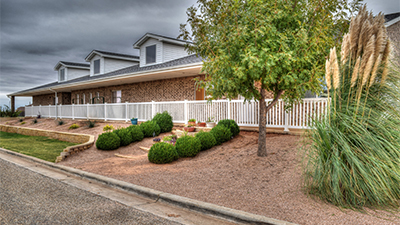
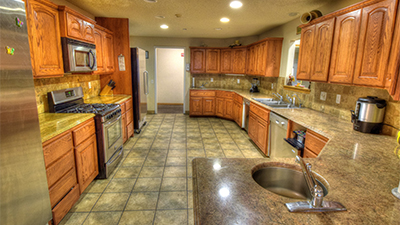
Beehive Homes of Lamesa TX assisted living care is ideal for those who value their independence but require help with some of the activities of daily living. Residents enjoy 24-hour support, private bedrooms with baths, medication monitoring, home-cooked meals, housekeeping and laundry services, social activities and outings, and daily physical and mental exercise opportunities. Beehive Homes memory care services accommodates the growing number of seniors affected by memory loss and dementia. Beehive Homes offers respite (short-term) care for your loved one should the need arise. Whether help is needed after a surgery or illness, for vacation coverage, or just a break from the routine, respite care provides you peace of mind for any length of stay.
101 N 27th St, Lamesa, TX 79331
Business Hours
Monday thru Sunday: 9:00am to 5:00pm
Facebook: https://www.facebook.com/BeeHiveHomesLamesa
YouTube: https://www.youtube.com/@WelcomeHomeBeeHiveHomes
Families seldom prepare for the moment a parent or partner needs more aid than home can reasonably provide. It creeps in quietly. Medication gets missed out on. A pot burns on the stove. A nighttime fall goes unreported up until a next-door neighbor notices a contusion. Selecting in between assisted living and memory care is not just a real estate decision, it is a scientific and psychological option that impacts self-respect, safety, and the rhythm of daily life. The expenses are significant, and the differences amongst neighborhoods can be subtle. I have sat with households at cooking area tables and in health center discharge lounges, comparing notes, clearing up misconceptions, and equating lingo into real scenarios. What follows shows those conversations and the useful truths behind the brochures.
What "level of care" really means
The phrase sounds technical, yet it comes down to how much assistance is required, how frequently, and by whom. Neighborhoods examine citizens across common domains: bathing and dressing, mobility and transfers, toileting and continence, consuming, medication management, cognitive assistance, and danger habits such as wandering or exit-seeking. Each domain gets a rating, and those scores tie to staffing needs and regular monthly costs. Someone may need light cueing to keep in mind a morning routine. Another might need 2 caretakers and a mechanical lift for transfers. Both might reside in assisted living, but they would fall under extremely various levels of care, with cost distinctions that can go beyond a thousand dollars per month.
The other layer is where care occurs. Assisted living is developed for people who are mainly safe and engaged when given periodic support. Memory care is constructed for individuals dealing with dementia who require a structured environment, specialized engagement, and staff trained to reroute and disperse stress and anxiety. Some requirements overlap, however the shows and security features differ with intention.
Daily life in assisted living
Picture a small apartment with a kitchen space, a personal bath, and enough area for a preferred chair, a couple of bookcases, and family images. Meals are served in a dining-room that feels more like an area cafe than a hospital cafeteria. The objective is independence with a safety net. Personnel help with activities of daily living on a schedule, and they sign in between tasks. A resident can go to a tai chi class, sign up with a discussion group, or skip all of it and read in the courtyard.
In practical terms, assisted living is a good fit when a person:
- Manages the majority of the day independently but needs trusted assist with a couple of jobs, such as bathing, dressing, or handling complex medications. Benefits from ready meals, light housekeeping, transportation, and social activities to lower isolation. Is generally safe without consistent supervision, even if balance is not perfect or memory lapses occur.
I remember Mr. Alvarez, a former shop owner who transferred to assisted living after a minor stroke. His child stressed over him falling in the shower and avoiding blood thinners. With scheduled morning support, medication management, and evening checks, he found a brand-new routine. He consumed better, gained back strength with onsite physical treatment, and soon seemed like the mayor of the dining room. He did not need memory care, he needed structure and a team to find the little things before they became huge ones.
Assisted living is not a nursing home in miniature. A lot of communities do not offer 24-hour certified nursing, ventilator support, or complex injury care. They partner with home health companies and nurse specialists for intermittent competent services. If you hear a promise that "we can do everything," ask specific what-if concerns. What if a resident requirements injections at precise times? What if a urinary catheter gets obstructed at 2 a.m.? The right community will answer clearly, and if they can not offer a service, they will inform you how they handle it.
How memory care differs
Memory care is developed from the ground up for people with Alzheimer's illness and related dementias. Layouts lessen confusion. Hallways loop rather than dead-end. Shadow boxes and individualized door signs help citizens acknowledge their rooms. Doors are protected with quiet alarms, and courtyards enable safe outside time. Lighting is even and soft to minimize sundowning triggers. Activities are not just set up events, they are healing interventions: music that matches an era, tactile tasks, directed reminiscence, and short, predictable routines that lower anxiety.
A day in memory care tends to be more staff-led. Rather of "activities at 2 p.m.," there is a constant cadence of engagement, sensory hints, and gentle redirection. Caregivers typically know each resident's life story all right to link in minutes of distress. The staffing ratios are greater than in assisted living, due to the fact that attention requires to be continuous, not episodic.
Consider Ms. Chen, a retired teacher with moderate Alzheimer's. In the house, she woke in the evening, opened the front door, and strolled up until a neighbor guided her back. She dealt with the microwave and grew suspicious of "strangers" entering to assist. In memory care, a group redirected her throughout agitated durations by folding laundry together and strolling the interior garden. Her nutrition enhanced with small, frequent meals and finger foods, and she rested much better in a peaceful room away from traffic sound. The change was not about quiting, it had to do with matching the environment to the method her brain now processed the world.
The happy medium and its gray areas
Not everyone needs a locked-door system, yet standard assisted living may feel too open. Many neighborhoods acknowledge this gap. You will see "improved assisted living" or "assisted living plus," which typically suggests they can offer more regular checks, specialized behavior support, or higher staff-to-resident ratios without moving somebody to memory care. Some provide little, safe and secure areas nearby to the primary building, so homeowners can go to shows or meals outside the neighborhood when suitable, then return to a calmer space.
The limit typically boils down to safety and the resident's response to cueing. Occasional disorientation that resolves with mild pointers can often be managed in assisted living. Consistent exit-seeking, high fall risk due to pacing and impulsivity, unawareness of toileting requires that leads to regular mishaps, or distress that intensifies in hectic environments typically signifies the requirement for memory care.
Families sometimes delay memory care since they fear a loss of freedom. The paradox is that numerous homeowners experience more ease, because the setting reduces friction and confusion. When the environment expects needs, self-respect increases.
How neighborhoods figure out levels of care
An evaluation nurse or care planner will fulfill the potential resident, evaluation medical records, and observe mobility, cognition, and habits. A couple of minutes in a peaceful office misses out on important information, so excellent assessments include mealtime observation, a strolling test, and a review of the medication list with attention to timing and side effects. The assessor ought to inquire about sleep, hydration, bowel patterns, and what happens on a bad day.

Most neighborhoods price care utilizing a base rent plus a care level charge. Base lease covers the house, utilities, meals, housekeeping, and programming. The care level includes expenses for hands-on assistance. Some providers utilize a point system that transforms to tiers. Others use flat packages like Level 1 through Level 5. The distinctions matter. Point systems can be accurate however vary when requires modification, which can annoy households. Flat tiers are foreseeable but might mix extremely various needs into the exact same cost band.
Ask for a composed description of what receives each level and how typically reassessments take place. Also ask how they handle short-lived changes. After a healthcare facility stay, a resident may require two-person support for two weeks, then return to standard. Do they upcharge instantly? Do they have a short-term ramp policy? Clear answers help you budget plan and avoid surprise bills.
Staffing and training: the critical variable
Buildings look lovely in pamphlets, however daily life depends upon the people working the flooring. Ratios differ widely. In assisted living, daytime direct care coverage often varies from one caregiver for 8 to twelve residents, with lower coverage overnight. Memory care frequently aims for one caretaker for 6 to eight homeowners by day and one for eight to ten at night, plus a med tech. These are descriptive ranges, not universal rules, and state regulations differ.
Beyond ratios, training depth matters. For memory care, try to find ongoing dementia-specific education, not a one-time orientation. Techniques like recognition, favorable physical method, and nonpharmacologic habits strategies are teachable abilities. When a distressed resident shouts for a spouse who died years ago, a well-trained caregiver acknowledges the feeling and offers a bridge to convenience rather than remedying the truths. That kind of skill preserves dignity and minimizes the requirement for antipsychotics.
Staff stability is another signal. Ask the number of agency workers fill shifts, what the yearly turnover is, and whether the very same caregivers normally serve the very same homeowners. Continuity constructs trust, and trust keeps care on track.
Medical support, treatment, and emergencies
Assisted living and memory care are not medical facilities, yet medical needs thread through every day life. Medication management prevails, including insulin administration in many states. Onsite doctor check outs vary. Some communities host a visiting medical care group or geriatrician, which reduces travel and can capture modifications early. Lots of partner with home health suppliers for physical, occupational, and speech treatment after falls or hospitalizations. Hospice groups typically work within the neighborhood near completion of life, permitting a resident to remain in place with comfort-focused care.
Emergencies still arise. Ask about action times, who covers nights and weekends, and how staff intensify concerns. A well-run building drills for fire, serious weather condition, and infection control. Throughout breathing virus season, search for transparent communication, flexible visitation, and strong protocols for isolation without social neglect. Single spaces help in reducing transmission however are not a guarantee.
Behavioral health and the tough minutes households rarely discuss
Care requirements are not just physical. Stress and anxiety, anxiety, and delirium make complex cognition and function. Discomfort can manifest as aggressiveness in someone who can not explain where it hurts. I have seen a resident labeled "combative" unwind within days when a urinary tract infection was treated and an inadequately fitting shoe was replaced. Excellent communities run with the assumption that habits is a form of interaction. They teach personnel to try to find triggers: hunger, thirst, dullness, sound, temperature shifts, or a congested hallway.
For memory care, focus on how the group discusses "sundowning." Do they adjust the schedule to match patterns? Offer peaceful jobs in the late afternoon, change lighting, or provide a warm treat with protein? Something as regular as a soft toss blanket and familiar music during the 4 to 6 p.m. window can change a whole evening.
When a resident's requirements exceed elderly care what a community can safely deal with, leaders ought to discuss choices without blame: short-term psychiatric stabilization, a higher-acuity memory care, or, occasionally, a competent nursing center with behavioral proficiency. No one wishes to hear that their loved one needs more than the existing setting, but prompt shifts can avoid injury and restore calm.
Respite care: a low-risk method to try a community
Respite care uses a furnished house, meals, and complete involvement in services for a short stay, normally 7 to thirty days. Families use respite during caregiver holidays, after surgeries, or to check the fit before committing to a longer lease. Respite remains expense more each day than basic residency since they consist of versatile staffing and short-term arrangements, but they use important information. You can see how a parent engages with peers, whether sleep improves, and how the team communicates.
If you are uncertain whether assisted living or memory care is the better match, a respite period can clarify. Staff observe patterns, and you get a practical sense of life without locking in a long agreement. I typically encourage households to schedule respite to begin on a weekday. Full teams are on site, activities perform at full steam, and physicians are more offered for fast adjustments to medications or therapy referrals.
Costs, agreements, and what drives cost differences
Budgets shape choices. In lots of areas, base rent for assisted living ranges extensively, frequently starting around the low to mid 3,000 s monthly for a studio and rising with home size and location. Care levels add anywhere from a few hundred dollars to a number of thousand dollars, connected to the intensity of assistance. Memory care tends to be bundled, with complete rates that starts higher since of staffing and security requirements, or tiered with less levels than assisted living. In competitive urban areas, memory care can start in the mid to high 5,000 s and extend beyond that for intricate needs. In suburban and rural markets, both can be lower, though staffing scarcity can push prices up.
Contract terms matter. Month-to-month contracts provide versatility. Some communities charge a one-time community cost, frequently equal to one month's rent. Inquire about annual boosts. Normal variety is 3 to 8 percent, but spikes can occur when labor markets tighten up. Clarify what is consisted of. Are incontinence materials billed separately? Are nurse evaluations and care plan meetings built into the fee, or does each visit bring a charge? If transport is used, is it free within a certain radius on specific days, or always billed per trip?
Insurance and benefits communicate with personal pay in confusing ways. Standard Medicare does not pay for space and board in assisted living or memory care. It does cover qualified experienced services like therapy or hospice, despite where the beneficiary lives. Long-lasting care insurance coverage may repay a part of expenses, but policies differ widely. Veterans and surviving partners may receive Aid and Participation advantages, which can balance out monthly charges. State Medicaid programs sometimes fund services in assisted living or memory care through waivers, however access and waitlists depend on geography and medical criteria.
How to examine a community beyond the tour
Tours are polished. Real life unfolds on Tuesday at 7 a.m. throughout a heavy care block, or at 8 p.m. when supper runs late and 2 residents require assistance simultaneously. Visit at various times. Listen for the tone of staff voices and the method they speak to citizens. Enjoy for how long a call light remains lit. Ask whether you can join a meal. Taste the food, and not simply on an unique tasting day.
The activity calendar can deceive if it is aspirational instead of genuine. Visit during a set up program and see who goes to. Are quieter homeowners engaged in one-to-one moments, or are they left in front of a tv while an activity director leads a video game for extroverts? Variety matters: music, movement, art, faith-based options, brain fitness, and disorganized time for those who choose small groups.
On the medical side, ask how frequently care strategies are upgraded and who participates. The very best plans are collective, reflecting family insight about regimens, comfort items, and lifelong preferences. That well-worn cardigan or a small ritual at bedtime can make a brand-new location feel like home.
Planning for progression and avoiding disruptive moves
Health changes over time. A neighborhood that fits today should be able to support tomorrow, a minimum of within an affordable variety. Ask what happens if walking declines, incontinence increases, or cognition worsens. Can the resident add care services in place, or would they require to move to a different apartment or unit? Mixed-campus communities, where assisted living and memory care sit steps apart, make transitions smoother. Staff can float familiar faces, and families keep one address.
I think about the Harrisons, who moved into a one-bedroom in assisted living together. Mrs. Harrison delighted in the book club and knitting circle. Mr. Harrison had mild cognitive disability that advanced. A year later on, he transferred to the memory care area down the hall. They consumed breakfast together most early mornings and invested afternoons in their preferred spaces. Their marital relationship rhythms continued, supported instead of eliminated by the structure layout.
When staying at home still makes sense
Assisted living and memory care are not the only responses. With the ideal mix of home care, adult day programs, and innovation, some individuals thrive in the house longer than expected. Adult day programs can offer socialization, meals, and guidance for 6 to eight hours a day, providing household caretakers time to work or rest. At home assistants help with bathing and respite, and a visiting nurse handles medications and injuries. The tipping point typically comes when nights are hazardous, when two-person transfers are needed routinely, or when a caretaker's health is breaking under the pressure. That is not failure. It is a sincere acknowledgment of human limits.
Financially, home care costs accumulate quickly, especially for over night coverage. In numerous markets, 24-hour home care surpasses the monthly cost of assisted living or memory care by a broad margin. The break-even analysis needs to consist of utilities, food, home upkeep, and the intangible costs of caretaker burnout.
A quick decision guide to match requirements and settings
- Choose assisted living when an individual is mostly independent, needs predictable help with daily jobs, take advantage of meals and social structure, and stays safe without continuous supervision. Choose memory care when dementia drives daily life, safety requires safe doors and experienced staff, behaviors require continuous redirection, or a busy environment consistently raises anxiety. Use respite care to test the fit, recover from disease, or give family caretakers a trusted break without long commitments. Prioritize communities with strong training, steady staffing, and clear care level requirements over purely cosmetic features. Plan for development so that services can increase without a disruptive move, and line up financial resources with reasonable, year-over-year costs.
What families frequently regret, and what they hardly ever do
Regrets rarely center on picking the second-best wallpaper. They fixate waiting too long, moving during a crisis, or choosing a neighborhood without understanding how care levels change. Families nearly never regret visiting at odd hours, asking hard concerns, and insisting on introductions to the real group who will supply care. They seldom regret using respite care to make decisions from observation instead of from worry. And they rarely are sorry for paying a bit more for a place where personnel look them in the eye, call locals by name, and treat small moments as the heart of the work.
Assisted living and memory care can protect autonomy and meaning in a stage of life that should have more than security alone. The best level of care is not a label, it is a match in between a person's requirements and an environment created to fulfill them. You will understand you are close when your loved one's shoulders drop a little, when meals happen without triggering, when nights become foreseeable, and when you as a caregiver sleep through the opening night without jolting awake to listen for steps in the hall.
The choice is weighty, but it does not need to be lonesome. Bring a notebook, invite another set of ears to the tour, and keep your compass set on every day life. The right fit reveals itself in regular moments: a caregiver kneeling to make eye contact, a resident smiling throughout a familiar song, a tidy bathroom at the end of a busy early morning. These are the signs that the level of care is not just scored on a chart, but lived well, one day at a time.
BeeHive Homes of Lamesa TX provides assisted living care
BeeHive Homes of Lamesa TX provides memory care services
BeeHive Homes of Lamesa TX provides respite care services
BeeHive Homes of Lamesa TX supports assistance with bathing and grooming
BeeHive Homes of Lamesa TX offers private bedrooms with private bathrooms
BeeHive Homes of Lamesa TX provides medication monitoring and documentation
BeeHive Homes of Lamesa TX serves dietitian-approved meals
BeeHive Homes of Lamesa TX provides housekeeping services
BeeHive Homes of Lamesa TX provides laundry services
BeeHive Homes of Lamesa TX offers community dining and social engagement activities
BeeHive Homes of Lamesa TX features life enrichment activities
BeeHive Homes of Lamesa TX supports personal care assistance during meals and daily routines
BeeHive Homes of Lamesa TX promotes frequent physical and mental exercise opportunities
BeeHive Homes of Lamesa TX provides a home-like residential environment
BeeHive Homes of Lamesa TX creates customized care plans as residents’ needs change
BeeHive Homes of Lamesa TX assesses individual resident care needs
BeeHive Homes of Lamesa TX accepts private pay and long-term care insurance
BeeHive Homes of Lamesa TX assists qualified veterans with Aid and Attendance benefits
BeeHive Homes of Lamesa TX encourages meaningful resident-to-staff relationships
BeeHive Homes of Lamesa TX delivers compassionate, attentive senior care focused on dignity and comfort
BeeHive Homes of Lamesa TX has a phone number of (806) 452-5883
BeeHive Homes of Lamesa TX has an address of 101 N 27th St, Lamesa, TX 79331
BeeHive Homes of Lamesa TX has a website https://beehivehomes.com/locations/lamesa/
BeeHive Homes of Lamesa TX has Google Maps listing https://maps.app.goo.gl/ta6AThYBMuuujtqr7
BeeHive Homes of Lamesa TX has Facebook page https://www.facebook.com/BeeHiveHomesLamesa
BeeHive Homes of Lamesa has an YouTube page https://www.youtube.com/@WelcomeHomeBeeHiveHomes
BeeHive Homes of Lamesa TX won Top Assisted Living Homes 2025
BeeHive Homes of Lamesa TX earned Best Customer Service Award 2024
BeeHive Homes of Lamesa TX placed 1st for Senior Living Communities 2025
People Also Ask about BeeHive Homes of Lamesa TX
What is BeeHive Homes of Lamesa Living monthly room rate?
The rate depends on the level of care that is needed. We do an initial evaluation for each potential resident to determine the level of care needed. The monthly rate is based on this evaluation. There are no hidden costs or fees
Can residents stay in BeeHive Homes until the end of their life?
Usually yes. There are exceptions, such as when there are safety issues with the resident, or they need 24 hour skilled nursing services
Do we have a nurse on staff?
No, but each BeeHive Home has a consulting Nurse available 24 – 7. if nursing services are needed, a doctor can order home health to come into the home
What are BeeHive Homes’ visiting hours?
Visiting hours are adjusted to accommodate the families and the resident’s needs… just not too early or too late
Do we have couple’s rooms available?
Yes, each home has rooms designed to accommodate couples. Please ask about the availability of these rooms
Where is BeeHive Homes of Lamesa TX located?
BeeHive Homes of Lamesa is conveniently located at 101 N 27th St, Lamesa, TX 79331. You can easily find directions on Google Maps or call at (806) 452-5883 Monday through Sunday 9:00am to 5:00pm
How can I contact BeeHive Homes of Lamesa TX?
You can contact BeeHive Homes of Lamesa by phone at: (806) 452-5883, visit their website at https://beehivehomes.com/locations/lamesa/, or connect on social media via Facebook or YouTube
Pedroza's Restaurant offers casual dining in a welcoming setting ideal for assisted living, memory care, senior care, elderly care, and respite care visits.